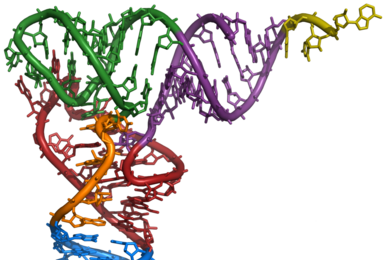
Genetic 911: Cells’ emergency systems revealed
Study examines how cells exploit gene sequences to cope with toxic stress.
Study examines how cells exploit gene sequences to cope with toxic stress.
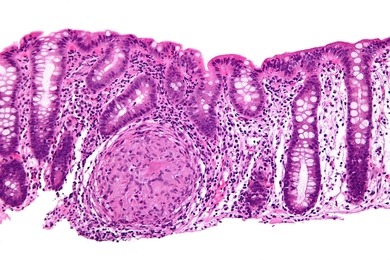
New MIT study offers comprehensive look at chemical and genetic changes that occur as inflammation progresses to cancer.
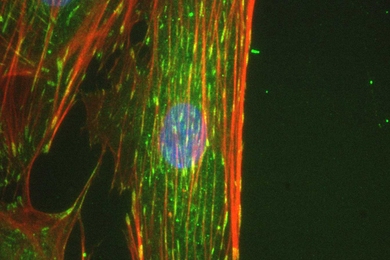
Making proteins stand in line could lead to more lifelike lab tests.

MIT study suggests that at low dose-rate, radiation poses little risk to DNA.
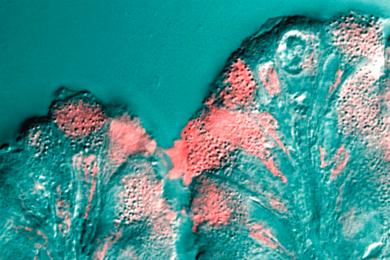
MIT biological engineers find that proteins in mucus help ward off viral infection.
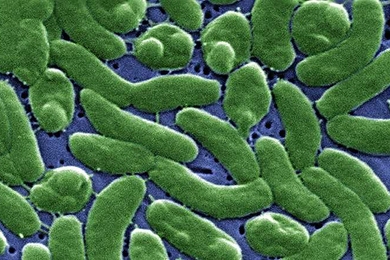
A single gene mutation can sweep through a population, opening the door for the concept of ‘species’ in bacteria.
Alan Jasanoff is designing imaging sensors that could help reveal the brain’s inner workings.
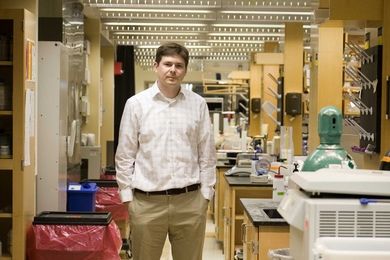
By swapping microbial genes, Chris Voigt designs cells with novel functions.

Several Institute alumni also among 66 new members announced today.
Photovoltaic panels made from plant material could become a cheap, easy alternative to traditional solar cells.
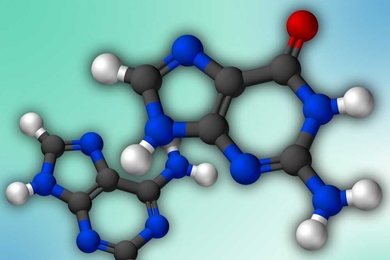
New study could explain why variant enzymes boost the risk of cancer for some people.
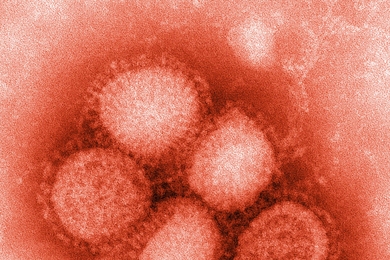
Model of flu proteins suggests new way to design vaccines that slow mutations.