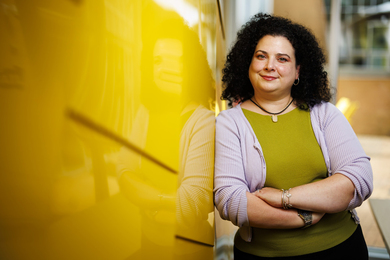
Using AI to mitigate the growing environmental threat of data centers
By rethinking how large cloud computing systems operate, Associate Professor Christina Delimitrou seeks to make data centers more energy efficient.
By rethinking how large cloud computing systems operate, Associate Professor Christina Delimitrou seeks to make data centers more energy efficient.

MIT researchers built a cloud-based platform to help Massachusetts coastal towns and the state manage shellfishing closures, giving thousands of permit holders a clearer view of where they can fish.
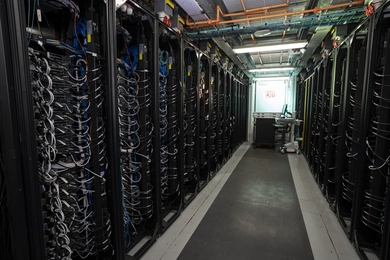
An ongoing survey tracks the latest AI accelerator systems to keep hardware relevant for Lincoln Laboratory staff and sponsors.

The PKG Center for Social Impact expands Code.Tulsa experiential learning program.

MIT affiliates engage with the MIT-IBM Computing Research Lab to bring rigorous theory to production systems.
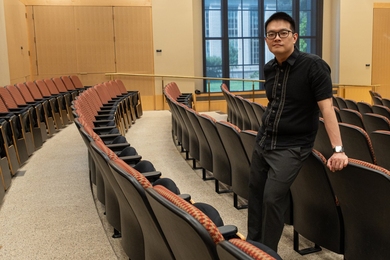
Graduate student Lyonel Tanganco investigates how to improve public policy interventions and address challenges in nutrition, climate, and development.

A new method for surgically removing training examples from a model reveals that as datasets grow, the link between what a model learns and what it produces dissolves.

The visionary PhysioNet platform launched 25 years ago, based on a system developed at MIT in the 1970s. It has become one of the most comprehensive biomedical and clinical data repositories in existence.

Assistant Professor Pat Pataranutaporn describes a new interface that lets everyday users glimpse inside an AI's neural network before their chatbot ever says a word.

Through research and entrepreneurship, Professor Devavrat Shah is helping to design methods that can handle constant decision-making using limited computational resources.

PhD candidate Henry Wang works with FIFA and other organizations to advance the way sports are played, analyzed, and refereed.
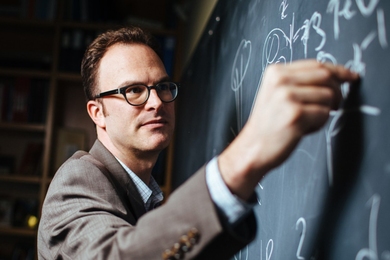
The professor of physics and inaugural director of the NSF AI Institute for Artificial Intelligence and Fundamental Interactions will lead LNS and continue his research in particle physics.

Computer scientist Phillip Isola cuts through the hype to explain how AI agents work and what the future might hold for this rapidly advancing technology.
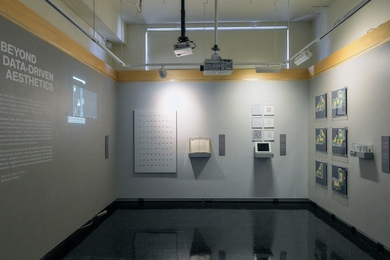
In a new Keller Gallery exhibition, Alexandros Haridis SM ’17, PhD ’22 traces centuries of ideas about aesthetic judgment and explores how design can make complex computational systems visible.

A new system, known as Murakkab, optimizes the design and deployment of multistep workflows that power AI applications.