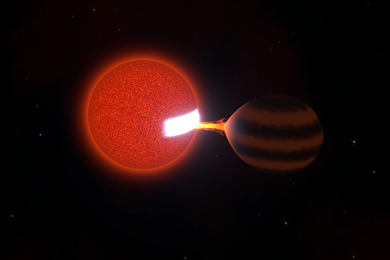
Astronomers catch a star slowly snacking on a brown dwarf, 300 light years away
The discovery reveals a new way that stars and planetary companions can interact.
The discovery reveals a new way that stars and planetary companions can interact.
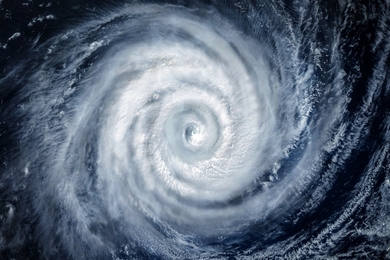
The Climate Grand Challenges “New World of Weather” project shows how modeling, planning tools, and infrastructure analysis are translating research into real-world resilience.

Inaugural artist Amy Karle will join astrophysicists at MIT’s Kavli Institute to explore questions about the universe and translate them into an immersive multimedia experience.
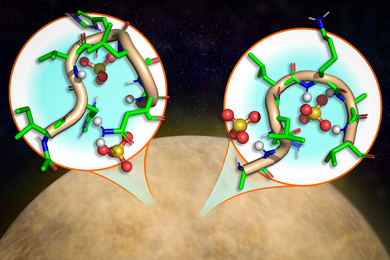
New research offers support for the possibility that complex biological molecules could exist in the highly acidic environment of Venus’s cloud layer.
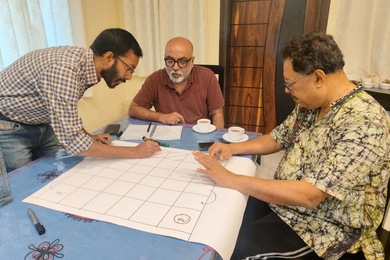
Climate scientist Sai Ravela is using games to help coastal communities find creative adaptations to climate change.
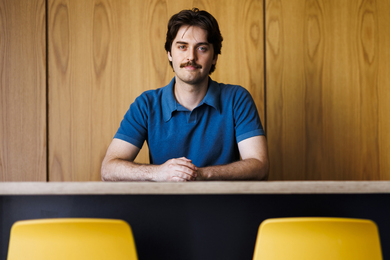
The PhD student’s research on how microorganisms digest compounds in their environment could enable advances in wastewater treatment.

The discovery likely represents the earliest known evidence of a magnetic field in the infant solar system.
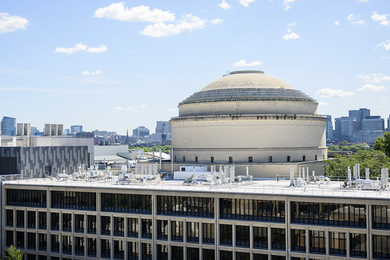
The Materials Research Science and Engineering Center unites researchers across disciplines to develop technologies for medical imaging, sustainable metals production, and next-generation electronics.
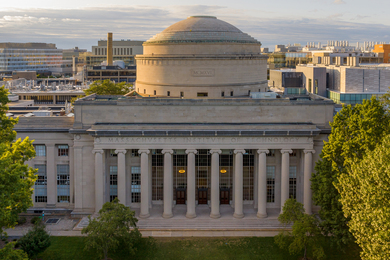
Initial research projects advance national priorities across natural resources, manufacturing, nuclear physics, and more.
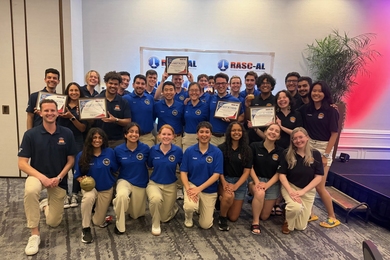
Three MIT teams took five top awards in the 2026 NASA RASC-AL Competition for designing critical elements for the moon base and future missions to Mars.
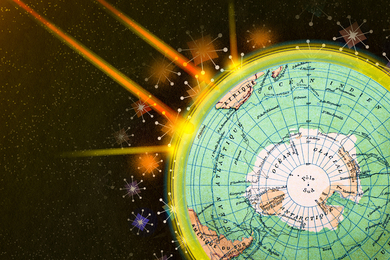
Using modern tools, they also determined that carbon tetrachloride, used as a dry-cleaning and degreasing agent as early as the 1930s, was at the root of early ozone loss.
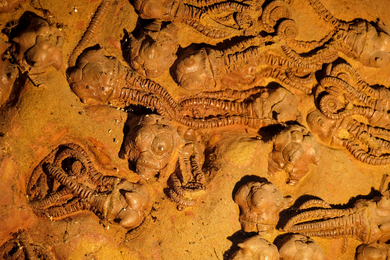
A new model links Earth’s mass extinctions to mismatches between rates of environmental change and biological adaptation.

Fourth-year PhD candidate Perrin Davidson studies the carbon cycle to understand how the planet responds to global disturbances.

Ranking at the top for the 15th year in a row, the Institute also places first in 12 subject areas.
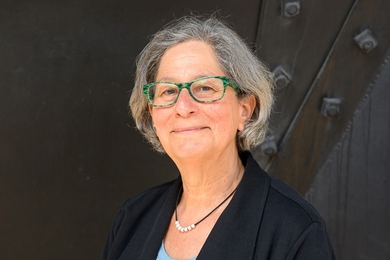
The MIT professor’s groundbreaking work on atmospheric chemistry helped lay steps towards recovery of the ozone layer and demonstrated the lasting impacts of carbon emissions on Earth’s climate.