
MIT Climate “Plug-In” highlights first year of progress on MIT’s climate plan
Members of three working groups outline latest efforts implementing the ambitious plan, launched last year.
Members of three working groups outline latest efforts implementing the ambitious plan, launched last year.
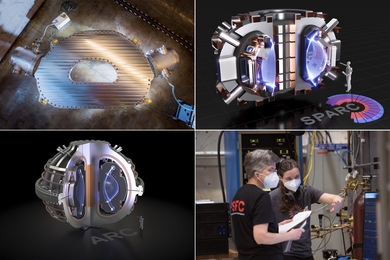
New five-year agreement will support SPARC science, increase graduate students and postdocs, and support interdisciplinary work toward fusion power plants.

New understanding of metal electrolysis could help optimize production of metals like lithium and iron.

Study finds activating a Clean Air Act provision could deliver major climate, health, and economic benefits.

The student pitch competition included a variety of solutions addressing water access, usage, and maintenance.

Workshop hosted by MIT’s Climate and Sustainability Consortium, MIT-IBM Watson AI Lab, and the MIT Schwarzman College of Computing highlights how new approaches to computing can save energy and help the planet.

Linking techniques from machine learning with advanced numerical simulations, MIT researchers take an important step in state-of-the-art predictions for fusion plasmas.
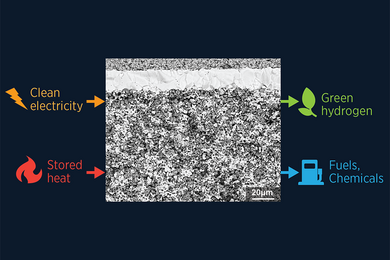
New technology could help generate hydrogen and chemical industry ingredients.

New study reveals multiple pathways for a successful energy transition by 2050.

Special Presidential Envoy for Climate John Kerry calls the initiative “classic MIT.”

The Center for Electrification and Decarbonization of Industry unites MIT climate researchers to create scalable clean energy solutions under one roof.
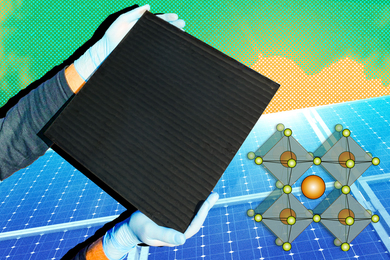
Perovskite materials would be superior to silicon in PV cells, but manufacturing such cells at scale is a huge hurdle. Machine learning can help.

The design could someday enable a fully decarbonized power grid, researchers say.

An early interest in archaeology led senior Sophia Mittman to explore many facets of materials science, from restoring artwork to making mining more sustainable.
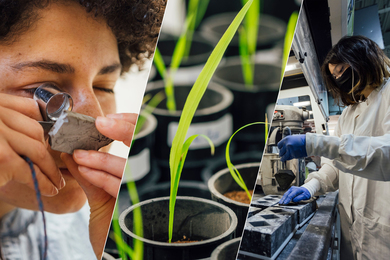
The portfolio of multiyear projects focuses on delivering breakthrough solutions.