New analysis shows ion slowdown in fuel cell material
Dislocations in oxides seen as promising electrolytes create a “traffic jam” for charged ions.
Dislocations in oxides seen as promising electrolytes create a “traffic jam” for charged ions.

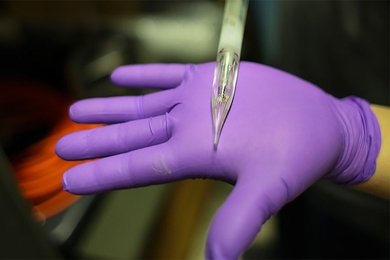
New approach could enable low-cost silicon devices in fibers that could be made into fabrics.

Award allows MIT senior to pursue a PhD in materials and manufacturing engineering at the University of Cambridge.

Analysis shows certain crystal boundaries can enhance, or reduce, hydrogen’s damaging effects.

Twelve new faces join six academic departments in the School of Engineering.
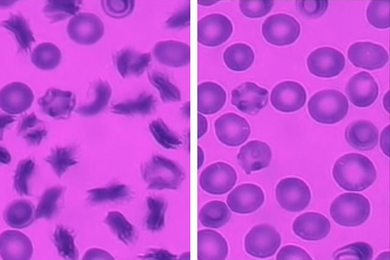
Microfluidic device allows researchers to predict behavior of patients’ blood cells.

Implanted into the brain or spinal column, they can transmit drugs, light, and electrical signals.
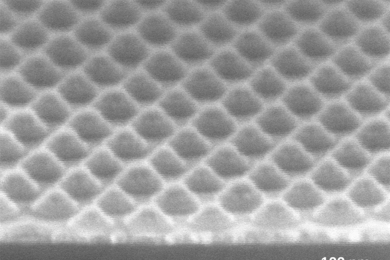
Caroline Ross and Geoffrey Beach are studying how the “spin” of electrons on nanomagnets could be manipulated to create faster, more energy-efficient computers.
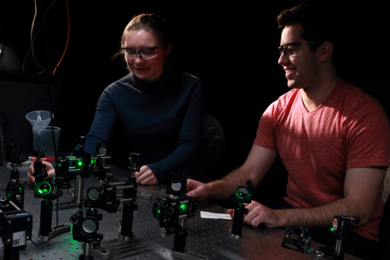
MIT chemical engineering graduate student Mark Weidman and colleagues demonstrate how to synthesize lead sulfide nanocrystals of uniform size.

Diversity of sources and sustainable production methods are needed to meet world potassium fertilizer demand.

Materials Day Symposium highlights breakthroughs in simulation methods, manufacturing techniques, and improved alloys.

Tomás Palacios explores the application of novel materials in next-generation electronics to save energy and expand possibilities.