
An answer to a lunar mystery: Why is the moon’s gravity so uneven?
Simulations based on GRAIL data show how gravitational anomalies developed early in lunar history.

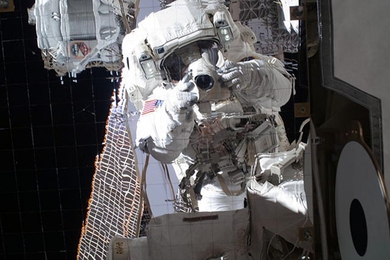
Shedding light on the search for dark matter
Physicists and astronaut discuss cosmic ray detector’s findings of possible signs of dark matter.

NASA selects MIT-led TESS project for 2017 mission
$200 million project will launch telescopes to perform full-sky search for transiting exoplanets.
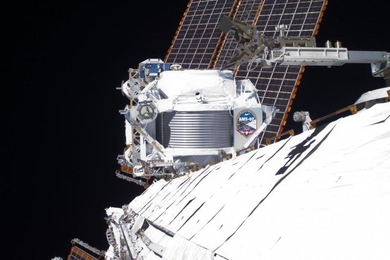
CERN announces measurement of antimatter excess in space
MIT physicist and AMS spokesman Samuel Ting presents results via webcast.
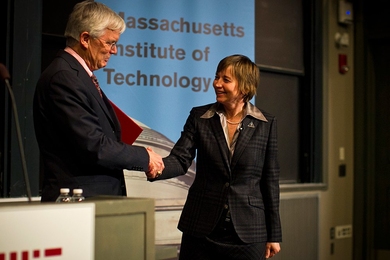
Mapping the early history of the moon
In 41st annual Killian Lecture, Maria Zuber describes looking deep into the moon’s interior to chart its early history.
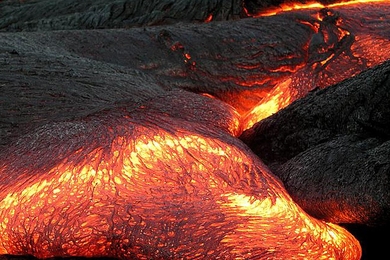
Mercury may have harbored an ancient magma ocean
Massive lava flows may have given rise to two distinct rock types on Mercury’s surface.

Students take control of satellites on the International Space Station
200 high-school students participate in MIT’s annual Zero Robotics competition.
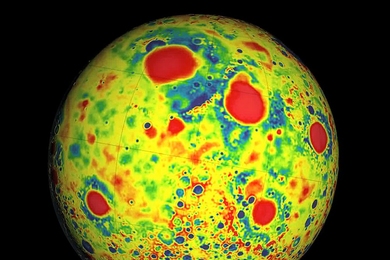
GRAIL reveals a battered lunar history
Twin spacecraft create a highly detailed gravity map of the moon, finding an interior pulverized by early impacts.
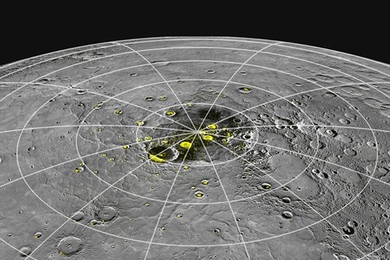
Scientists discover water ice on Mercury
Ice and organic material may have been carried to the planet by passing comets.
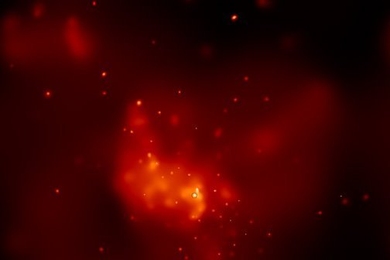
A burst of activity in the middle of the Milky Way
Researchers detect the brightest flare ever observed in our galaxy’s black hole.
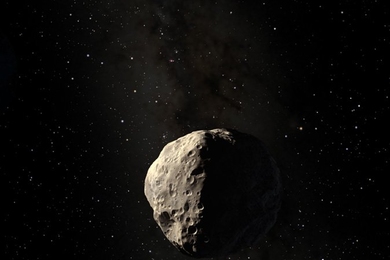
Paintballs may deflect an incoming asteroid
With 20 years’ notice, paint pellets could cause an asteroid to veer off course.
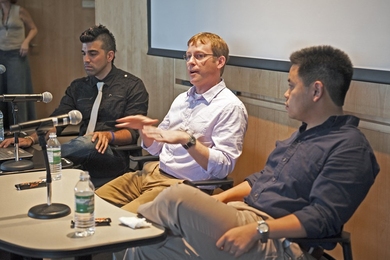
MIT alums recount their Martian experiences
Several AeroAstro alumni return to campus to describe landing the Curiosity rover on Mars.
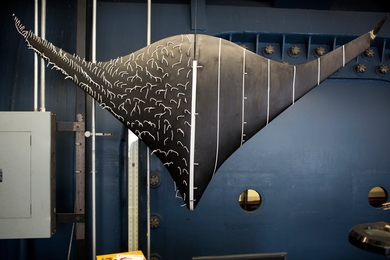
Department snapshot: Aeronautics and Astronautics
AeroAstro takes off in new directions — prompting a 50 percent spike in new undergraduate enrollments.