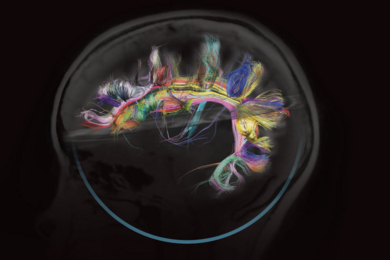
Trapping light with a twister
New understanding of how to halt photons could lead to miniature particle accelerators, improved data transmission.
New understanding of how to halt photons could lead to miniature particle accelerators, improved data transmission.
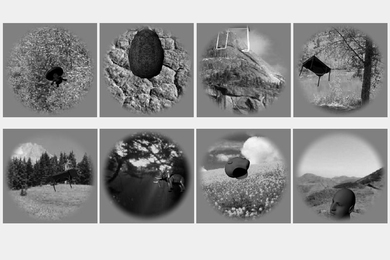
Newest computer neural networks can identify visual objects as well as the primate brain.

Before an asteroid wiped out the dinosaurs, Earth experienced a short burst of intense volcanism.

Study shows that the effects of smaller eruptions have been underestimated in climate models.

MIT team provides theoretical roadmap to making 2-D electronics with novel properties.

Technique could let a small electrical signal change materials’ electrical, thermal, and optical characteristics.

In support of three new experiments, MIT's Enectali Figueroa-Feliciano will answer questions about dark matter research in a live Google Hangout on Nov. 20.
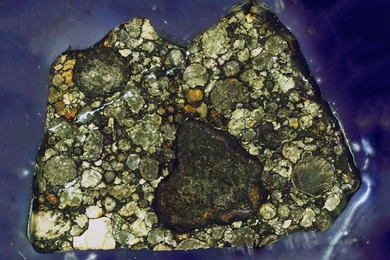
New study finds that a strong magnetic field whipped the early solar system into shape.
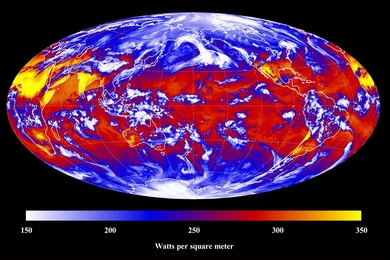
Researchers show that a canonical view of global warming tells only half the story.

Grad student Chi Lu and colleagues demonstrate a highly flexible polymer probe for triggering spinal-cord neurons with light and simultaneously recording their activity.
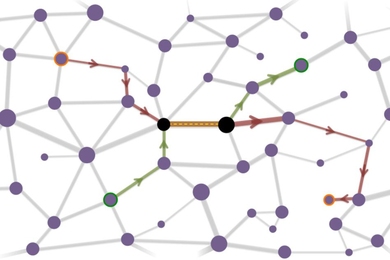
Model provides a more accurate tool for city planning, emergency evacuations, tracking disease spread.
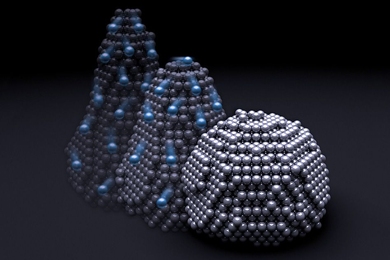
Unexpected finding shows tiny particles keep their internal crystal structure while flexing like droplets.

New mechanism of photoconduction could lead to next-generation excitonic devices.