
Making data-informed Covid-19 testing plans
A new web-friendly modeling tool helps organizations build tailored Covid-19 testing strategies that can save money and reduce coronavirus spread.
A new web-friendly modeling tool helps organizations build tailored Covid-19 testing strategies that can save money and reduce coronavirus spread.

Undergraduate in electrical engineering and computer science contributes to startling new astronomy research.

A key finding: Early reopening last spring led to a dramatic drop in “quarantine strength” in southern and west-central U.S. states.

MIT students Robert Koirala and Grace Smith intern for a nonprofit promoting educational and health equity in India.

Professor David Wallace and his team developed class 2.s009 (Explorations in Product Design) to give students the safest, best possible hands-on educational experience.

Curiosity-driven basic science in the 1970s laid the groundwork for today’s leading vaccines against the novel coronavirus.

Many years of research have enabled scientists to quickly synthesize RNA vaccines and deliver them inside cells.

MLK Visiting Scholar focuses on microelectronics for cell analysis and biomedical applications.

With safety measures in place, MIT Fitness reopens indoor classes and expands fitness access.

MIT Social Impact Interns partner with the Naval War College to develop an educational disaster response game.

Jasmine Florentine ’11, SM ’15 combines engineering and art to illustrate educational posters related to Covid-19.

Lincoln Laboratory researchers join international task force to evaluate wearable and emerging technology.
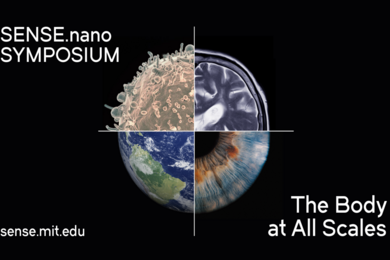
Applications and challenges of sensing technology have been accelerated by Covid-19.

As cases increased worldwide this spring, mechanical engineers developed solutions to help slow and stop the spread of the coronavirus.

The MIT Asian American Initiative designed and produced a digital zine highlighting MIT community members’ histories and heritage.