
Planning system ensures a robot’s flight path will remain collision-free
This new method, called “SANDO,” could help disaster-response robots navigate dangerous, unknown environments.
This new method, called “SANDO,” could help disaster-response robots navigate dangerous, unknown environments.

An ongoing survey tracks the latest AI accelerator systems to keep hardware relevant for Lincoln Laboratory staff and sponsors.

The discovery reveals a new way that stars and planetary companions can interact.

With $2.1 million funding from Google.org, the open-source Public Transit Intelligence Hub will unify public transit monitoring, operations, and passenger communication.

Able to defeat top-ranked human players and more efficient than other models, the new system could help decision-makers in military maneuvers or business negotiations.

Some tumor cells develop resistance by amplifying the KRAS gene, while others change their tumor type, MIT researchers have found.

J-PAL North America’s Learning Lab supported a second cohort of U.S. government and nonprofit organizations in building and using rigorous evidence to advance effective decarbonization and adaptation strategies.

MIT engineers’ new aquabot offers a way to design small, efficient “biohybrid” robots.

In a study focusing on hiring decisions, MIT researchers found the use of a single algorithm by many firms could benefit job seekers in certain situations.

Professor Sherry Turkle’s new book, “Artificial Intimacy,” offers a withering critique of chatbots and the antisocial dynamics she believes they encourage.

A new way of simulating wind turbines in the field shows how tweaking turbine operation could unlock tens of thousands of dollars per turbine every year.

MIT engineers have found a way to stabilize the lipid nanoparticles used to deliver RNA vaccines, which could allow the vaccines to be more widely distributed.
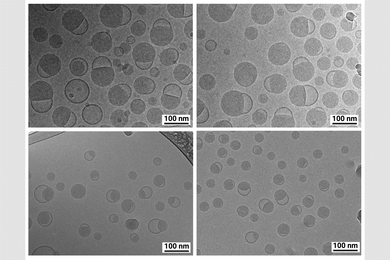
MIT chemical engineers found a way to rapidly produce lipid nanoparticles of varying sizes, which could make it easier to develop new vaccines and therapeutics.

A new language-processing tool could help identify the highest-risk individuals from natural language, enabling swifter interventions.

They also found that obesity may put patients at higher risk for activation of the pathway. Drugs that block the pathway may help prevent metastasis.