
Scientists make microscopes from droplets
With chemistry and light, researchers can tune the focus of tiny beads of liquid.
With chemistry and light, researchers can tune the focus of tiny beads of liquid.

Novel laminated nanostructure gives steel bone-like resistance to fracturing under repeated stress.

Researchers have discovered a new way to tune electronic energy levels in some 2-D materials.

“Wikum” system from CSAIL researchers provides readers with detailed summaries of online discussions.

MIT, Carnegie Mellon researchers explore “self-healing” batteries with new metal-halide solid electrolyte material.
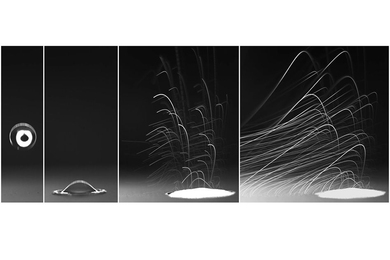
Global precipitation may account for 1 to 25 percent of bacteria emitted from land.

Newly discovered phenomenon accelerates electrons as they enter a viscous state.

New estimate predates earliest fossil evidence by 800 million years.



Turbulence from seafloor topography may explain longstanding question about ocean circulation.
New approach can help organizations scale their data science efforts with artificial data and crowdsourcing.
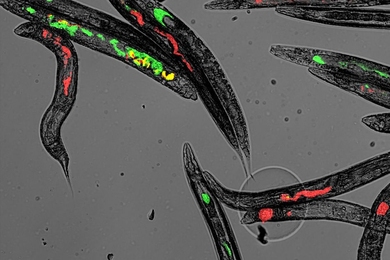
Study finds a role for randomness in the composition of the gut’s microbe populations.
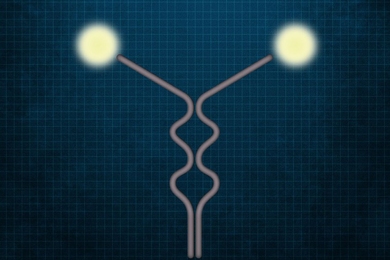
Seven-year study indicates two photons, not one, are exchanged in electron-proton interactions.
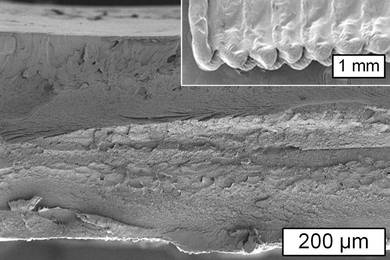
World’s most abundant polymer could rival petroleum-based plastics as source of printing feedstock.