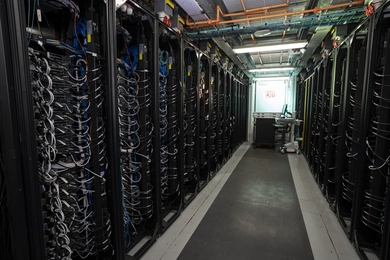
Supercomputing researchers document evolution of AI hardware
An ongoing survey tracks the latest AI accelerator systems to keep hardware relevant for Lincoln Laboratory staff and sponsors.
An ongoing survey tracks the latest AI accelerator systems to keep hardware relevant for Lincoln Laboratory staff and sponsors.

This advance could be a big step toward developing a scalable, practical quantum computer.

A new technique helps scientists measure a phenomenon that can cause quantum circuits to perform differently than expected, increasing the error in computations.

Building on a long-standing MIT–IBM collaboration, the new lab will chart the convergence of AI, algorithms, and quantum computing.
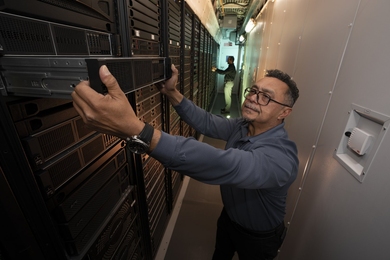
Optimized for generative AI, TX-GAIN is driving innovation in biodefense, materials discovery, cybersecurity, and other areas of research and development.

Explosive growth of AI data centers is expected to increase greenhouse gas emissions. Researchers are now seeking solutions to reduce these environmental harms.

The research center, sponsored by the DOE’s National Nuclear Security Administration, will advance the simulation of extreme environments, such as those in hypersonic flight and atmospheric reentry.

Researchers achieved a type of coupling between artificial atoms and photons that could enable readout and processing of quantum information in a few nanoseconds.
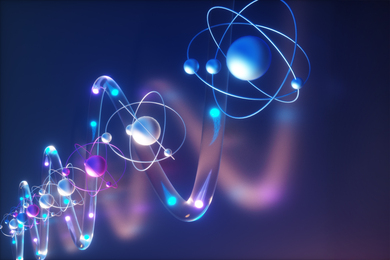
MIT researchers developed a photon-shuttling “interconnect” that can facilitate remote entanglement, a key step toward a practical quantum computer.
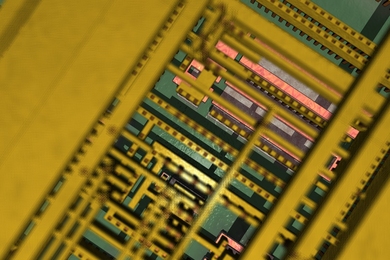
The Exo 2 programming language enables reusable scheduling libraries external to compilers.

The advance holds the promise to reduce error-correction resource overhead.
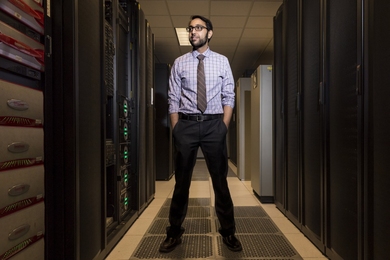
As the use of generative AI continues to grow, Lincoln Laboratory's Vijay Gadepally describes what researchers and consumers can do to help mitigate its environmental impact.

By emulating a magnetic field on a superconducting quantum computer, researchers can probe complex properties of materials.
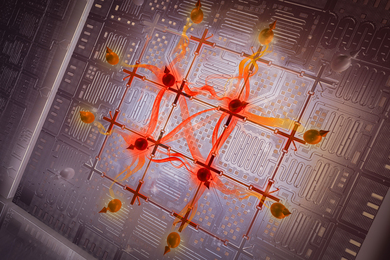
The advance offers a way to characterize a fundamental resource needed for quantum computing.

The advance brings quantum error correction a step closer to reality.