
Scientists gain new visibility into quantum information transfer
Advance holds promise for “wiring” of quantum computers and other systems, and opens new avenues for understanding basic workings of the quantum realm.
Advance holds promise for “wiring” of quantum computers and other systems, and opens new avenues for understanding basic workings of the quantum realm.

Emitted just 180 million years after Big Bang, signal indicates universe was much colder than expected.
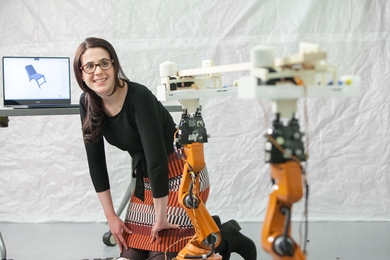
CSAIL’s robotic system minimizes dangerous sawing, helps users customize furniture.

Fluorescent sensor allows imaging of neurons' electrical communications, without electrodes.
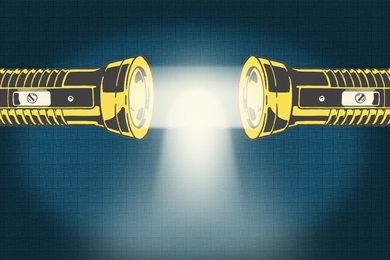
Newly observed optical state could enable quantum computing with photons.
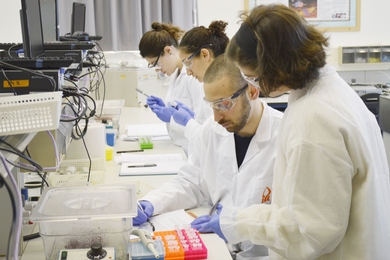
A new special subject, Agricultural Microbial Ecology, takes students to Israel.

The unusual characteristics of these abundant, bacteria-killing viruses could lead to evolutionary insights.
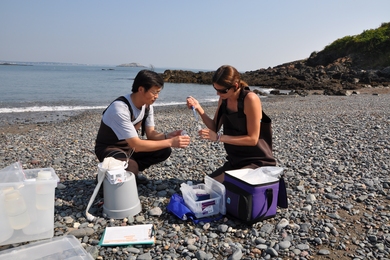
New research provides insight into the behavior of microbial communities in the ocean.

More than half of Roxbury, Bunker Hill, students with summer lab experience at MIT go on to earn a four-year degree.

Research shows the Clean Air Act was likely responsible for a dramatic decline in atmospheric organic aerosol.
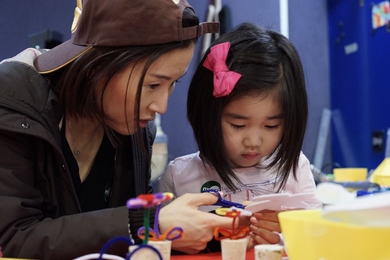
Thanks to a National Science Foundation grant, TSL will collaborate with Maker Ed to improve school-based assessment practices in maker-centered education.

Study shows that, like proteins, genomes must fold appropriately to function properly and that some transcription factors provide the structural support.
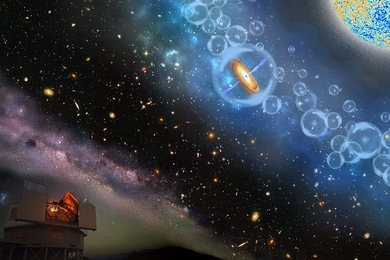
Findings present a puzzle as to how such a huge object could have grown so quickly.
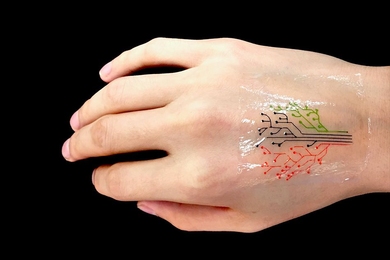
New technique 3-D prints programmed cells into living devices for first time.

Ten-month-old infants determine the value of a goal from how hard someone works to achieve it.